Description
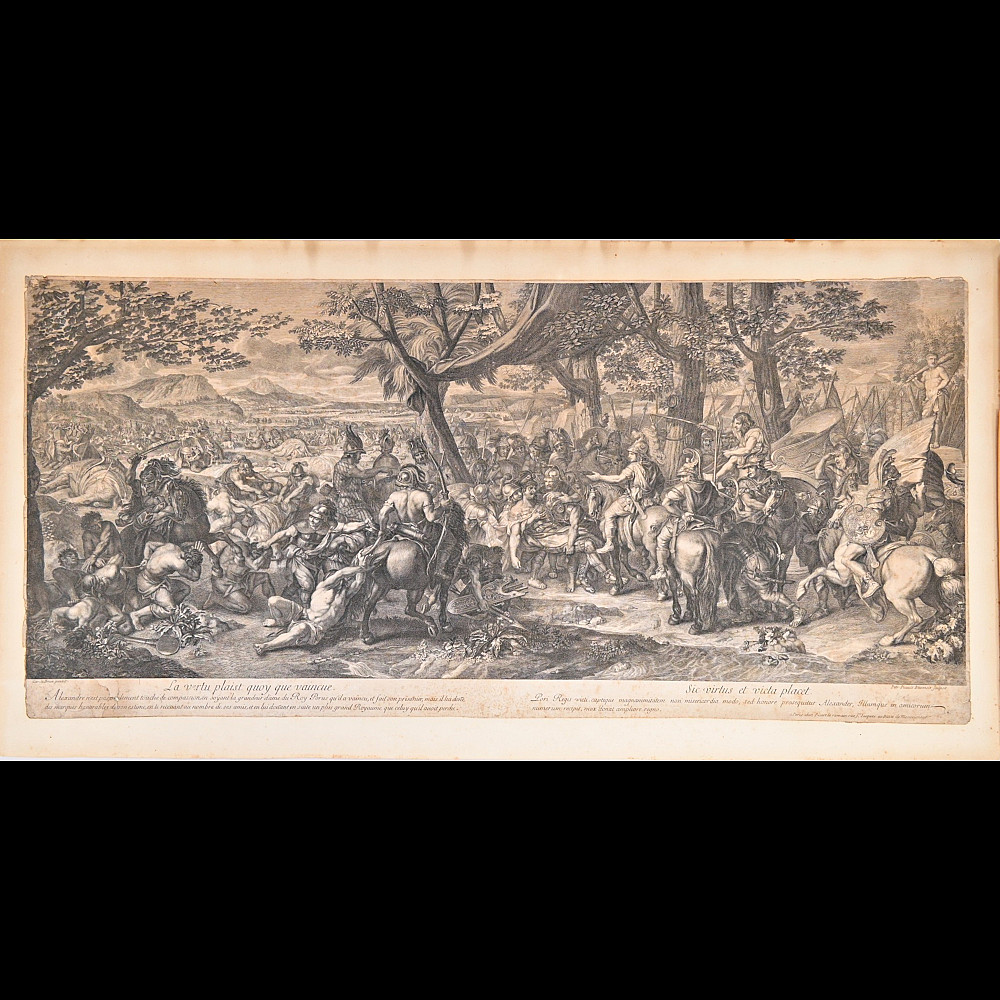
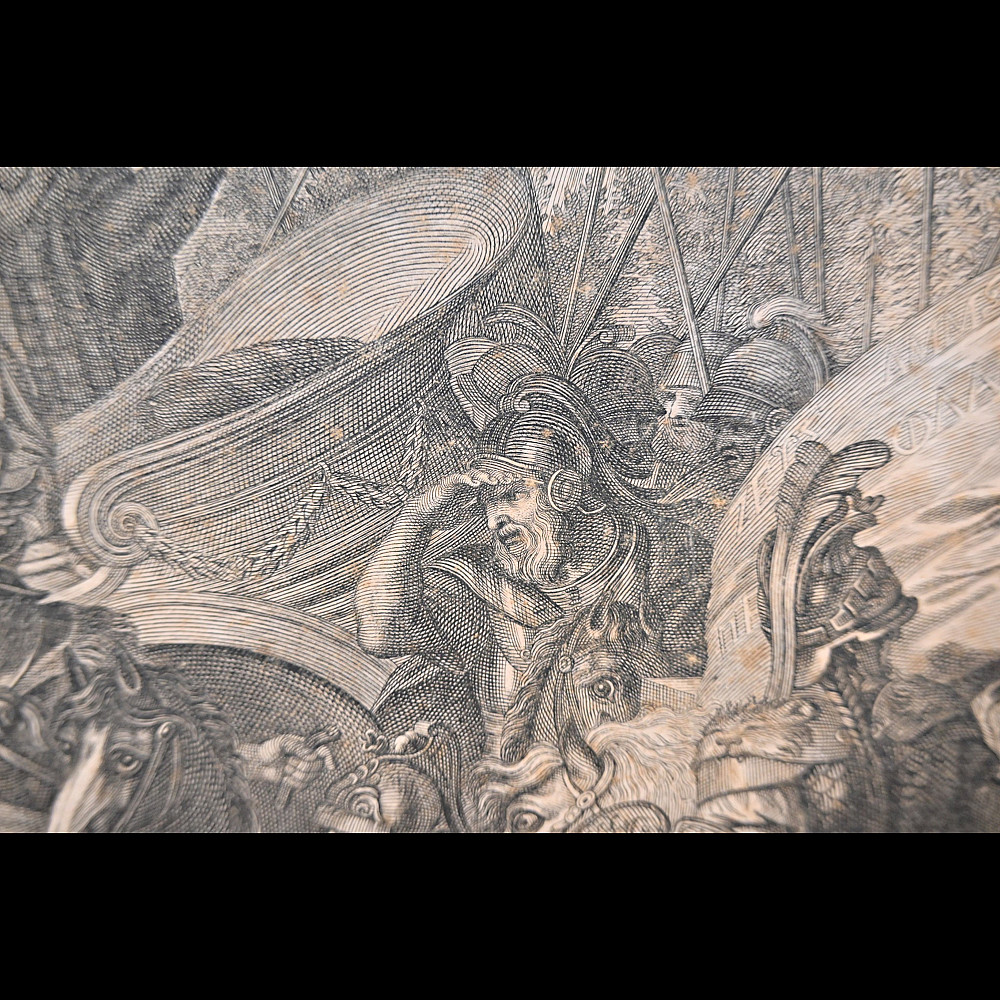
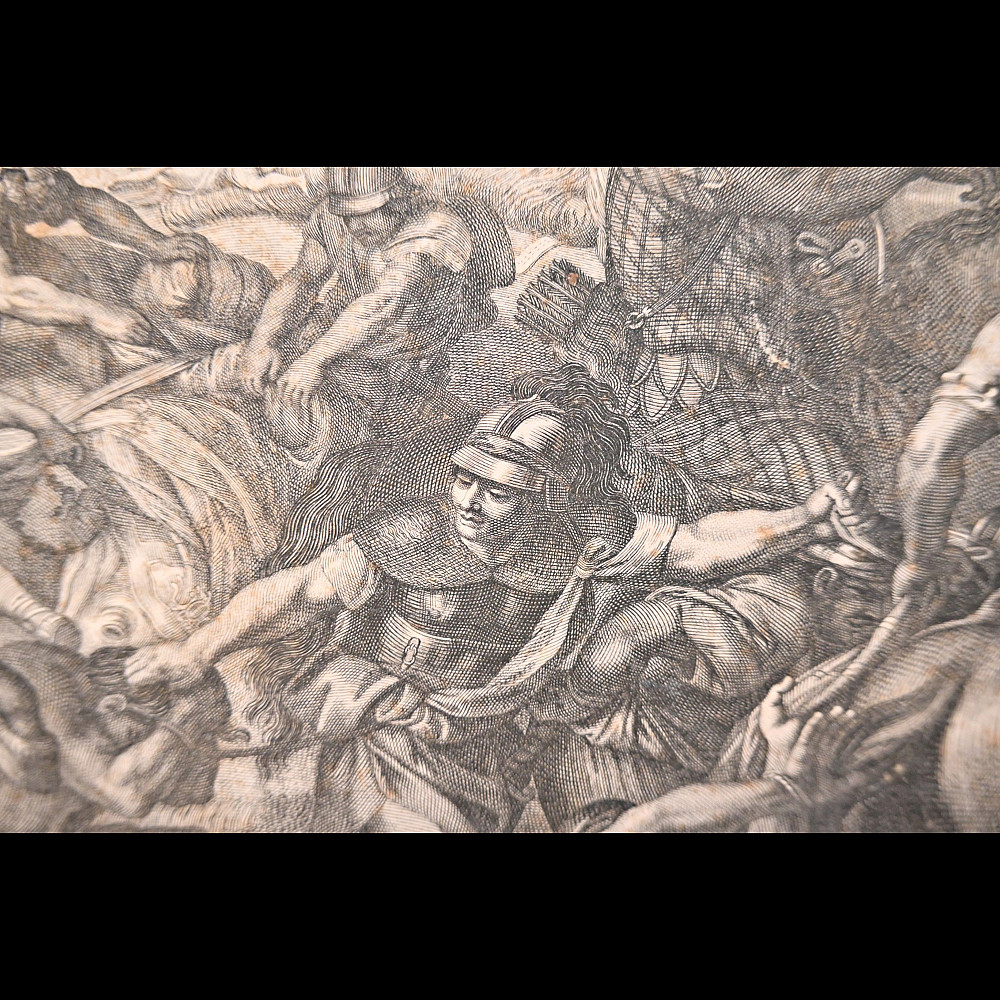
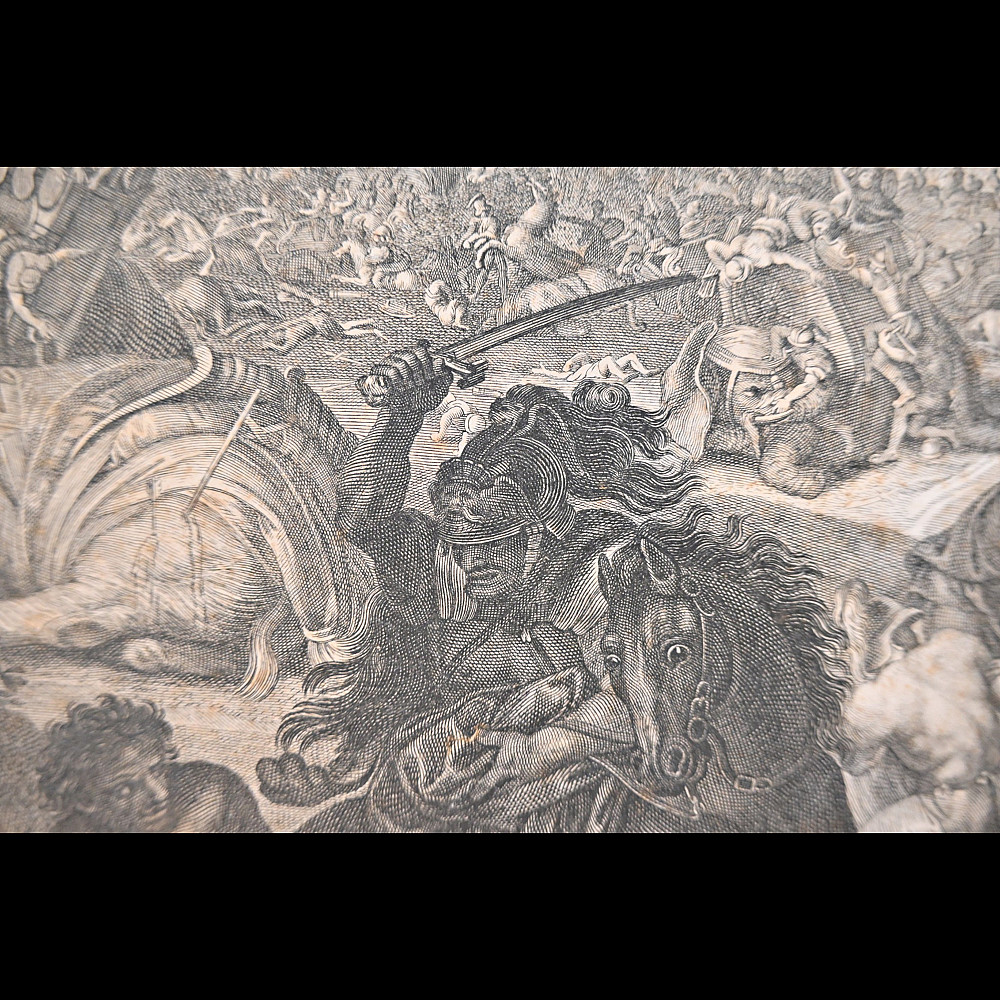
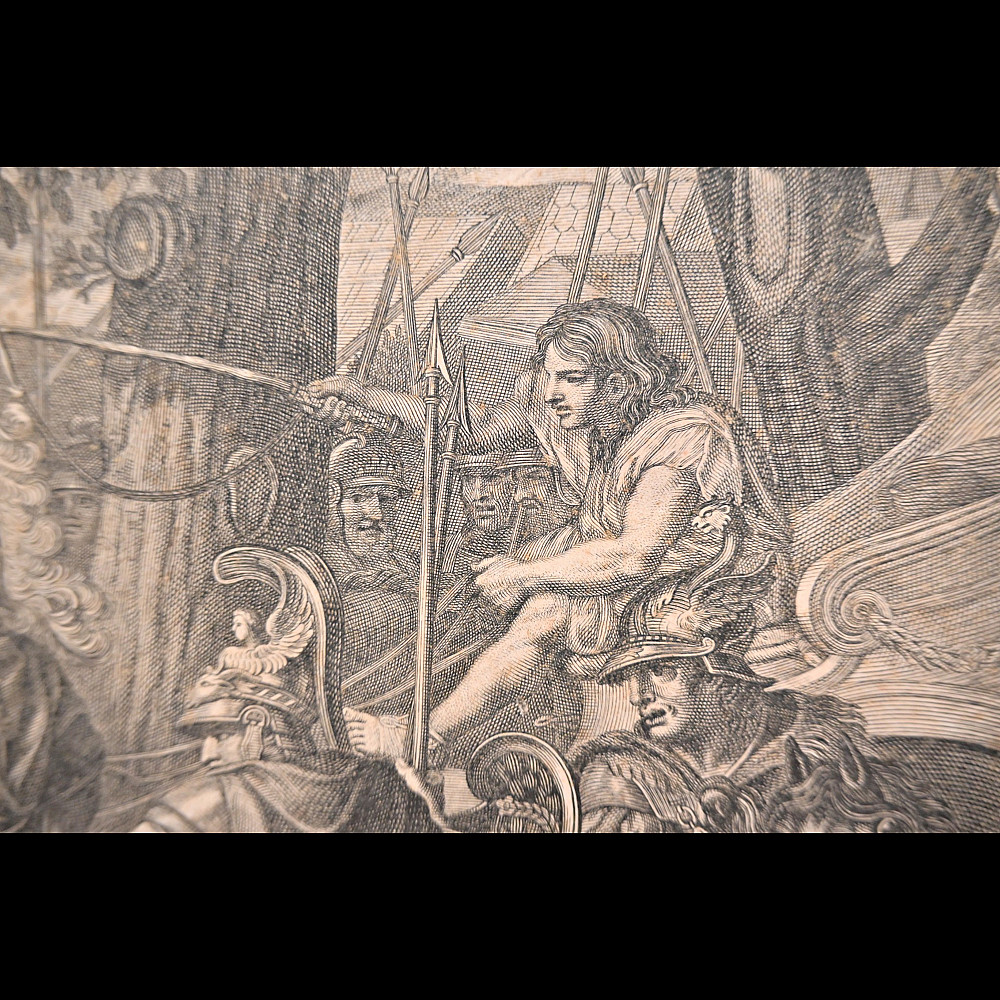
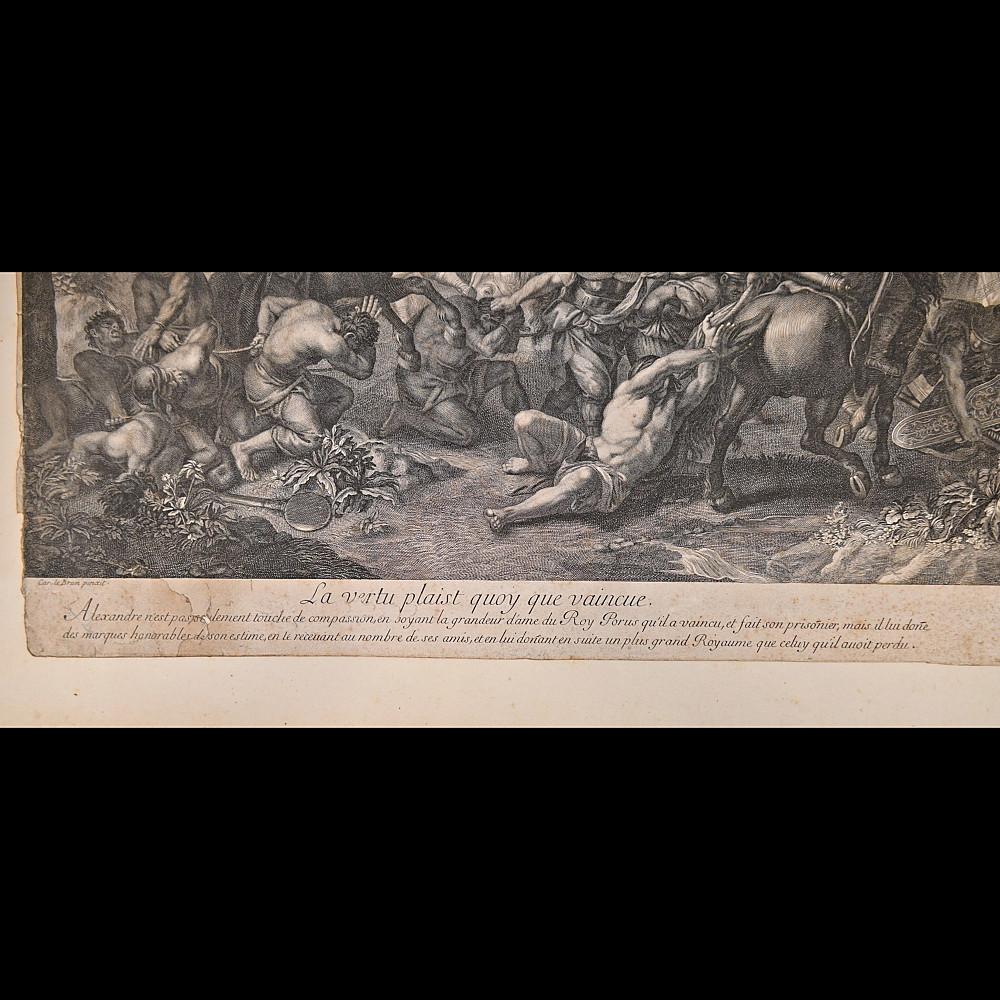
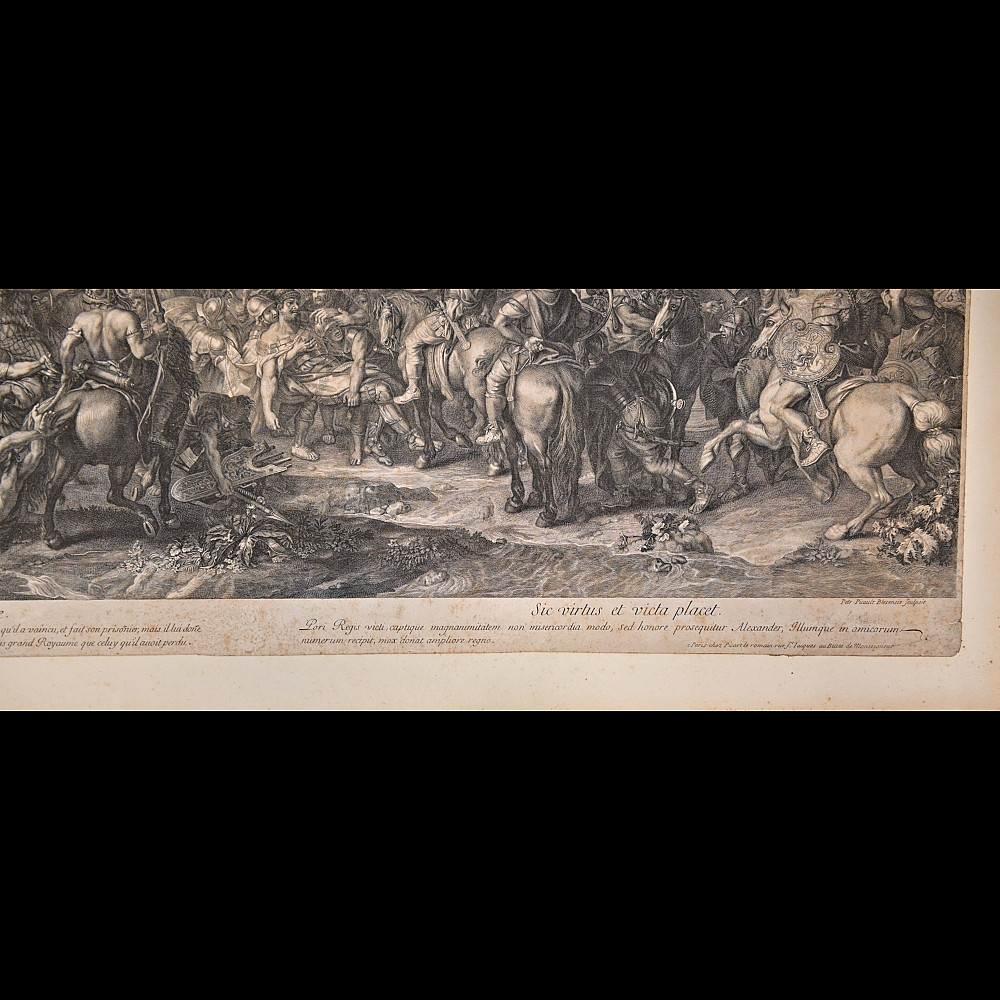
A 18th-Century Engraving of Alexander and Porus after Charles Le Brun by Picart. This magnificent early 18th-century monumental copperplate engraving, titled La vertu plaist quoy que vaincue (Virtue Pleases Though Defeated), depicts a dramatic climax from the legendary Battles of Alexander series originally designed by Charles Le Brun, the premier peintre du Roi to King Louis XIV. The complex grand-manner composition illustrates the historic aftermath of the Battle of the Hydaspes, capturing the poignant moment of magnanimity when Alexander the Great encounters the wounded, defeated Indian King Porus, a scene intended to celebrate heroic compassion and royal virtue. Masterfully executed using traditional engraving and etching techniques on a large sheet of hand-laid paper, the print showcases an extraordinary density of fine line work, precise cross-hatching, and dramatic chiaroscuro across the sweeping panoramic landscape filled with soldiers, cavalry, and war elephants. The lower margin is extensively inscribed with the dual titles and accompanying descriptive narrative paragraphs in both French and Latin, flanked by production credits reading "Car. le Brun pinxit" on the lower left and "Petr. Picart Blavensio sculpsit" on the lower right, alongside the Parisian publication address on Rue Saint-Jacques. This impressive historical print measures approximately 94 cm in width by 46 cm in height, representing a highly sophisticated example of classical European academic printmaking. The item is in good condition.